
Sustainability Strategy Development
From current-state analysis to targets, and from the action plan to the governance structure, we build a sustainability strategy aligned with your business objectives.
A Holistic Strategy for Sustainability
In many organisations, sustainability work starts as separate projects: energy efficiency on one side, waste on another, reporting on a third. A strategy is the framework that ties these topics to the same goal and decides which one to invest in first.
Service Scope
Materiality analysis
A materiality analysis is the study that determines which sustainability topics genuinely matter for your business and your stakeholders. We run it through stakeholder interviews and prioritise topics on the axes of impact and importance. The resulting priority list forms the backbone of both the strategy and later reports.
Targets and indicator set
A target that cannot be measured cannot be tracked. For each priority topic, we define a numerical target and the indicator that will track it, and we determine each indicator’s data source and owner at the same stage.
Science-based targets (SBTi)
Setting science-based targets means having your emission reduction target independently validated as consistent with the temperature goal of the Paris Agreement. We run the process from building the base-year inventory to calculating the targets and submitting them to SBTi.
ESG roadmap
We turn targets into an action plan broken down by year and owner: which action will be carried out in which year, with what budget and under whose responsibility. The roadmap makes the strategy defensible in management meetings and budget discussions.
Governance structure
We set up the sustainability committee, the decision-making mechanism, the reporting line and the review calendar. A strategy only lives inside a structure that owns it, so we put roles and responsibilities in writing.

Sustainability Strategy Development Process
Current-state analysis
We assess your operations, risks and opportunities from a sustainability perspective.

Materiality and prioritisation
Through stakeholder interviews, we identify which topics are critical for you and put them in priority order.

Targets and indicators
For each priority, we define a measurable target and the indicator that will track it.
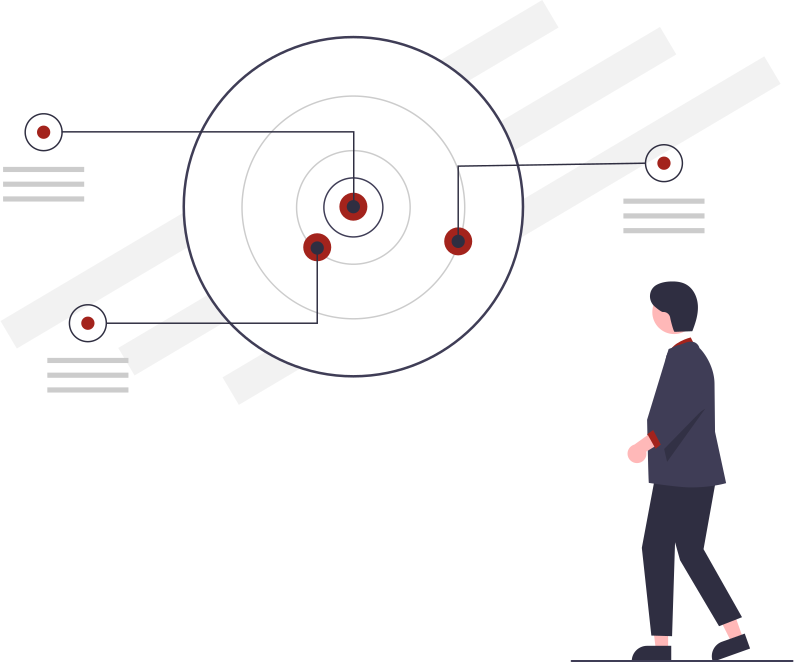
Roadmap
We prepare an action plan, with owners and dates, for reaching the targets.

Governance and monitoring
We clarify responsibilities, decision-making mechanisms and the review calendar.

Turn Sustainability into a Competitive Advantage
A clear sustainability strategy lets you direct your resources to where they will have the greatest impact and tell the story of your progress to stakeholders consistently.
- Prioritised risks
- Consistent data
- Sound investment decisions
- A structure that does not depend on individuals


Frequently Asked Questions
The first condition is that senior management owns the strategy. A strategy that has no counterpart at the management table remains a document and is not implemented. Operations, finance, human resources and procurement also need to be involved, because these units are the data owners behind the targets.
Yes. The scope and depth of the strategy are adapted to the size and needs of the organisation. In SMEs the work is usually shorter, and the first trigger is also different: a request from an OEM or export customer.
We recommend reviewing targets and progress regularly. Beyond that, when there is a significant change in your business conditions, customer requirements or legislation, the strategy needs to be updated without waiting for the calendar.
Yes. The priorities and indicators that are set form the backbone of your sustainability report. Building the strategy first means deciding up front which data you collect and why when you reach the reporting stage.
Yes. Existing systems such as ISO 14001 and ISO 45001 already include a cycle of targets, indicators and review. We build the strategy on top of that cycle; instead of setting up a separate monitoring structure, we use the management review that already works.
Related trainings

Related articles
 October 15, 2026
Which Sustainability Reporting Standard Should You Use?
Explore the purposes of GRI, ISSB, TSRS and ESRS, their key differences, and the right reporting approach for your company.
 October 15, 2026
What Is the ISO 50001 Energy Management System?
What is ISO 50001? Energy management, legal obligations, incentives.
 October 15, 2026
What Is ESG? Why Do Investors Look at Environmental and Social Scores?
What is ESG? ESG criteria, how scores are calculated and why investors pay attention to them.
Stay informed
Let us send up-to-date information on sustainability, regulations and industry developments, along with our announcements, to your inbox.
Newsletter sign-up will be available soon. Your personal data is processed in accordance with our Privacy Notice.