Circular Economy
From material and waste flow analysis to reuse and recovery models, we build business models that keep resources in value.
Circularity Starts at the Design Stage
Most waste is the result of decisions made while a product is being designed. We map your material flows, identify where resource loss occurs, and bring reduction, reuse and recovery into the design stage.
Service Scope
Resource efficiency
We map where raw material, energy and water inputs turn into losses and waste in your processes, and rank reduction, reuse and recovery opportunities by impact and feasibility. Because the recommendations rest on measured flows, they are not left to guesswork.
Circular product design
We evaluate the product on material selection, ease of disassembly, repairability and recyclability, and examine the effect of design changes together. Most waste is determined while the product is being designed.
Industrial symbiosis
One facility’s waste can be another facility’s raw material. Creating this match between neighbouring facilities, particularly in organised industrial zones, lowers both waste disposal and raw material costs for both sides. We compare waste and input inventories and set out the matching flows and the conditions for implementation.
Circular business models
We determine which models, such as reuse, repair, refurbishment and take-back, suit your product and customer structure. For each model, we set out the revenue impact, logistics needs and pilot implementation steps.
Circular Economy Process
Material and waste flow analysis
We map your resource use and waste generation points process by process.
Opportunity identification
We rank reduction, reuse and recovery opportunities by impact and feasibility.

Solution design
We develop practical solutions at the process, product and business model level.
Implementation support
We are with you on site during pilot implementations and solve the problems that arise together.
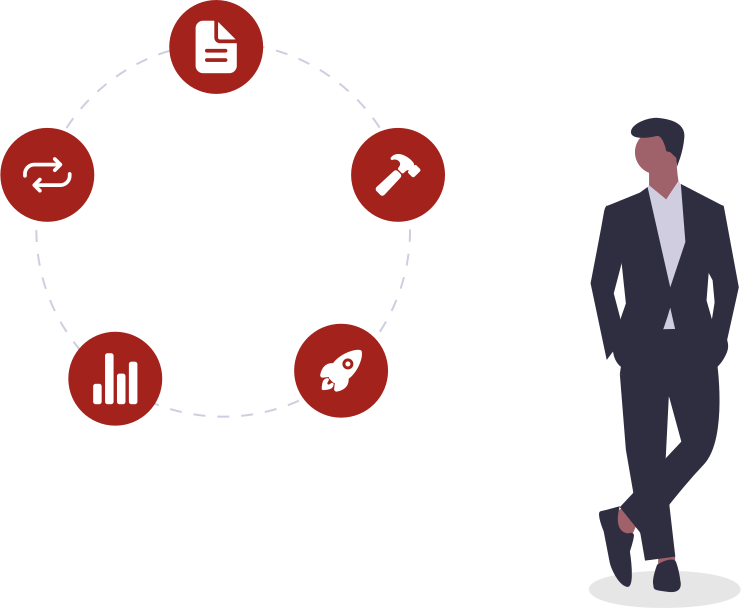
Impact measurement
We measure the environmental and economic gains achieved and determine the next step accordingly.
More Value with Fewer Resources
A circular approach lowers raw material and waste costs, while creating new revenue sources and a concrete sustainability story to tell your stakeholders.
- Lower raw material and disposal costs
- Preparing products for the EU market
- Resilience against supply disruption
- Revenue from waste
Frequently Asked Questions
No. Recycling is actually the last step of the circular economy, coming into play after the waste has already been created. The earlier steps are more valuable: design that prevents waste from arising at all, extending the life of the product, reuse and repair.
The impact is most pronounced in material- and energy-intensive sectors: manufacturing, packaging, textiles, food and construction. But the starting point is not the sector; it is your material flow. Without a flow analysis, there is no way of knowing which opportunity applies to you.
It is the use of one facility’s waste as another facility’s raw material. Creating this match between neighbouring facilities, especially in organised industrial zones, lowers both disposal and raw material costs for both parties.
Related articles
 October 16, 2026
The Türkiye Green Taxonomy Regulation
Türkiye Green Taxonomy Regulation: its green finance objectives, environmental goals and criteria.
 October 15, 2026
ISO 14001:2026 Is Published: What Has Changed? A Comprehensive Guide
ISO 14001:2026 is out: key changes, a 2015 comparison and a guide to the 30 April 2029 deadline.
Stay informed
Let us send up-to-date information on sustainability, regulations and industry developments, along with our announcements, to your inbox.
Newsletter sign-up will be available soon. Your personal data is processed in accordance with our Privacy Notice.